Goals
A goal is what should become true, stated so plainly that you can tell whether it happened. It is the centre of the workspace: projects, tasks, processes and agents all exist to move one, and when agents work on their own, goals are what they work back from.
Get these right and the rest of the workspace is mostly bookkeeping. Get them vague and every agent in the place produces plausible, useless work.
An outcome, with a measurement
Not "improve marketing" but "twelve qualified leads a month by March". A goal carries a metric, a baseline it started from, a target, how often it is measured, and where the number comes from.
Measurement is the part people skip and the part that pays for itself. A number lets an agent tell you the goal is behind before the deadline does, and lets you both see whether last month's work moved anything. Where the number cannot be pulled from a connected tool, the agent will ask you for it on the rhythm you set — which takes ten seconds and is the difference between a goal and a wish.
If a goal genuinely cannot be measured, that is worth knowing too. Usually it means the real goal is one level up and what you named is a means to it.
Roots and drivers
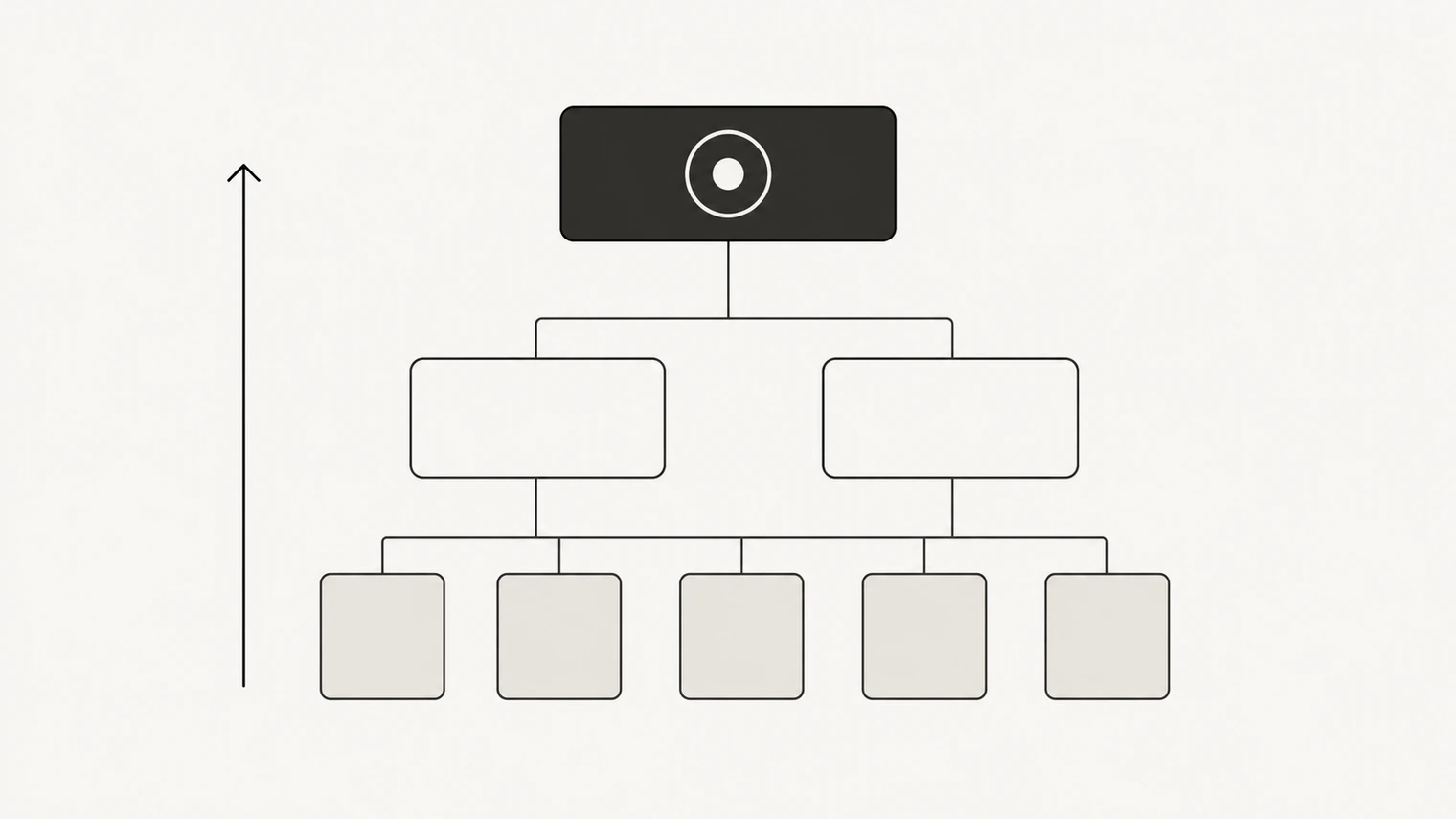
A workspace has one to three root goals — the ends the whole endeavour exists for — and driver goals underneath them: the handful of things that actually move a root.
If you sell consulting, revenue is a root. Average rate and number of engagements are drivers. Posting on LinkedIn is neither: it is an instrument, one of several ways a driver might move.
The tree matters because it is how work gets prioritised without you. An agent that knows which driver a task serves can tell you the task is not worth doing; an agent that only has a task list will do it beautifully and pointlessly.
Two or three drivers under a root is usually enough. A tree with fifteen branches is a list wearing a costume.
Expect to be argued with
When you state a goal, the assistant will ask why, sometimes twice. This is deliberate, and it is the single most useful thing it does at setup.
Almost everyone names an instrument first: run my Instagram, get more followers, hire a marketer, post three times a week. Those are levers. The goal is what the lever is meant to move. The agent will confirm it will do the thing you asked — the Instagram still gets run — and then record the objective above it, so that later, when Instagram turns out not to be moving anything, that becomes visible instead of invisible.
If you push back and say the instrument really is the goal, it will take your word for it. You know your business; it is asking, not overruling.
How agents use them
When agents run on their own, goals are the last stop in their priority order: anything needing you, then active work, then projects and processes, and finally goals that have gone quiet or fallen behind. A goal with a target and a date is what lets an agent notice "quiet" at all.
Goals are also what make a recommendation specific. "Should we do this?" is answerable when there is a number it is supposed to move, and unanswerable otherwise.
Keeping them honest
Two habits, and both take a minute.
Say when a goal stops mattering. An agent has no way to know that the target you set in January is no longer the point, and it will keep working towards it, competently, for as long as you let it. Retire it or change it out loud.
And ask for a review now and then — "what is stale here?" The agent reads the same files you can see and will tell you which goals have no work under them, which targets have passed, and which have not been measured in a month.