BossForce Vision
The company was invented in 1602. Today we're reinventing it.
BossForce. A Personal Company for everyone.
1. The first invention of the company

In 1602, the Dutch East India Company was founded in Amsterdam — one of the first companies whose shares were open to a broad public. Until then, large-scale trade had been the business of monarchs, rich merchants and powerful families. Now thousands of people could pool their capital, share the risk and own a piece of a common venture. For the first time, a company had thousands of co-owners.
Over four centuries, companies built factories, railroads, airplanes, computers and smartphones. The modern economy rests on them. The company learned to raise money from the many. But one thing has barely changed: behind every company there is still an organization — people who have to be found, hired and made to work together.
You have to assign responsibilities, set up processes, and then endlessly get sign-off, supervise and fix. Until you have a team, you do all of its work yourself. Even if you're the best at what you do, you become the manager, the accountant, the marketer and the salesperson all at once.
For four hundred years, your work became a business only once an organization had been built around it.
What if the organization no longer had to be built?
2. The second invention of the company
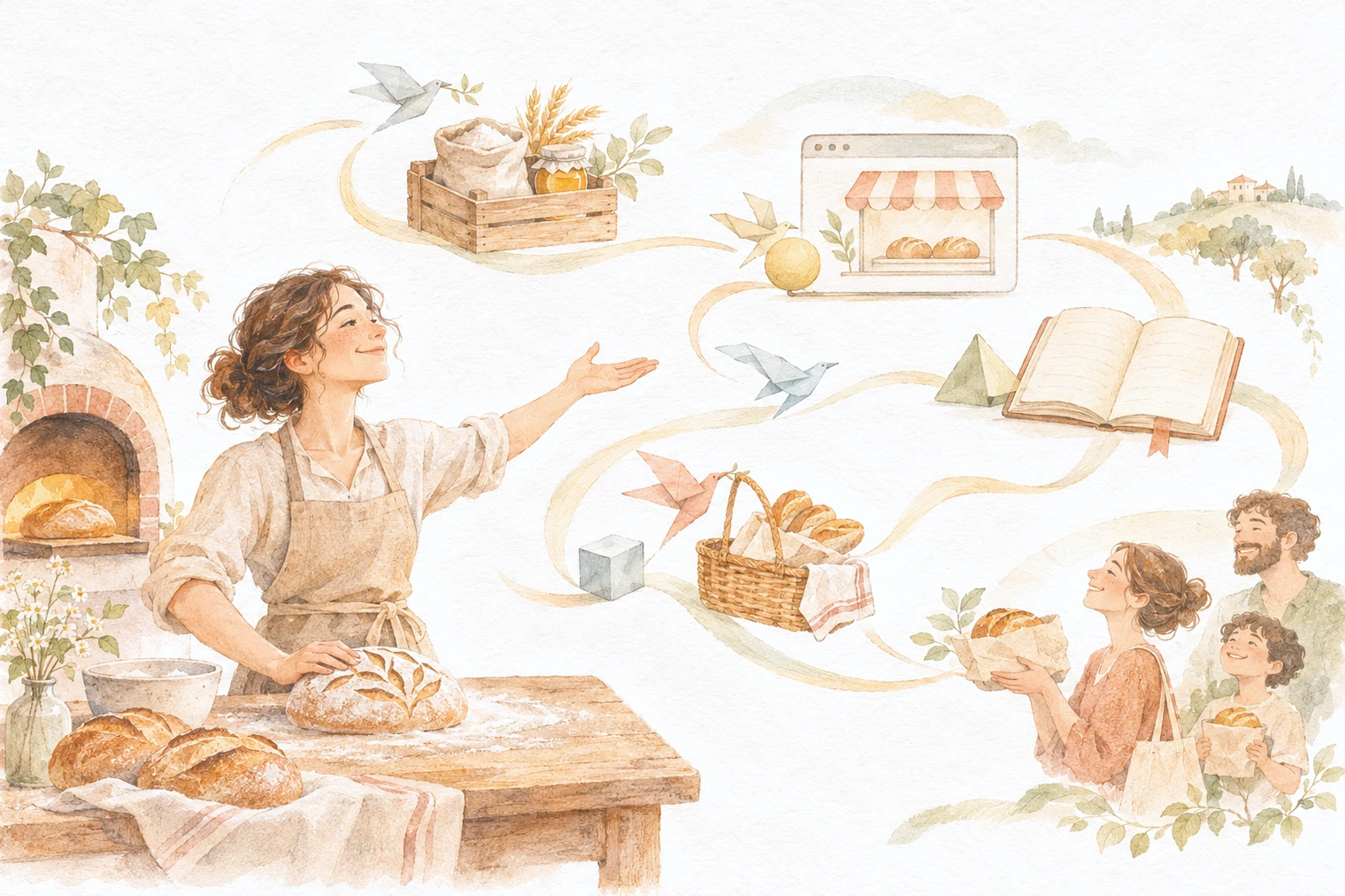
There was a time when a factory that needed electricity ran its own generator. Today it just plugs into the grid. The generator hasn't gone anywhere — it sits in a power plant; the factory just doesn't have to build its own anymore. Again and again, technology turns complex systems into services anyone can use. We believe the next such system will be the organization — the people, roles and processes no business can run without.
Take someone who bakes incredible bread. He dreams of his own bakery, but he doesn't want to deal with advertising, chase customers, keep the books, build a website, negotiate with suppliers or learn a dozen different apps. He wants to bake bread. Today, standing between his talent and a business of his own is an entire organization that has to be built and managed.
In the world of BossForce, the baker says a single sentence: “I want to open the best bakery in the neighborhood.” And he has a company.
The company studies the market, proposes a business model, creates a brand, launches a website, finds premises, suppliers, the first customers — and people to work the counter, if they're needed. Where the owner needs to decide, it asks. Where it can act on its own, it acts.
Inside the company, an organization is at work: AI agents in the roles of marketer, salesperson, accountant and buyer, with shared goals, plans, processes and memory.
A week later, the bakery has a website and its first orders. A month later, it has regulars. A year later, the business is up and running, growing and turning a profit. And he is still doing what he does best.
Baking bread.
BossForce doesn't abolish the organization — it gives it to you ready-made. The roles, the processes, the workforce are all still there; you just don't have to assemble them anymore. The company has them from day one.
You decide. The company delivers.
3. A personal company for everyone
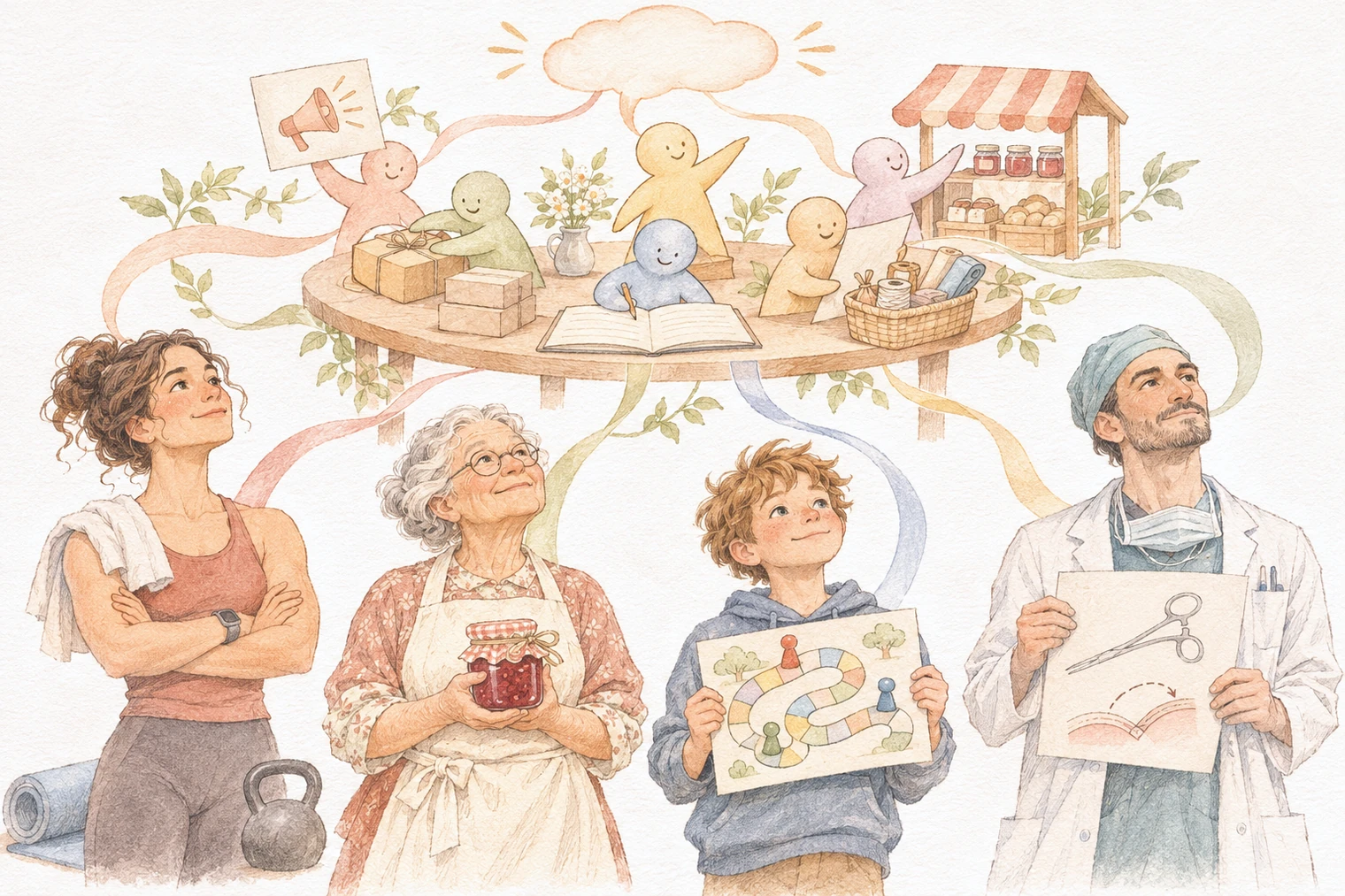
When Microsoft set out to put a computer on every desk, it sounded almost crazy: computers were expensive, complicated and available to very few. Today nearly everyone carries one in their pocket.
Having a company of your own today is where the computer was back then: a privilege of those with enough money, time, know-how or sheer persistence to build an organization around their work. But talent is spread far more widely than the chance to become an entrepreneur.
There's the coach who knows how to make people stronger but doesn't know how to sell their services.
There's the grandmother who makes the best jam in town but will never open an online store.
There's the schoolkid who invented a game but has no idea how to turn it into a product.
There's the surgeon who developed a one-of-a-kind technique but has no time to build a business around it.
Imagine each of them had a company of their own. Not a set of tools they still have to learn. Not a chatbot that gives advice on running a business. A real company that does the work itself: it understands what the owner wants, carries out the tasks, measures the results and corrects course.
The person brings what makes them unique: talent, knowledge, ideas, taste and the ability to make decisions. BossForce takes care of the organization.
Our mission is simple.
A personal company for every person.
4. A world with ten times as many companies

When the organization around a business becomes available to everyone, it isn't just entrepreneurship that changes — the whole economy does.
Many people work for someone else not because they don't want a business of their own, but because they can't afford to keep an organization running. When that barrier disappears, small businesses spring up everywhere. Experts turn what they know into products. People launch several companies at once, experiment, find their markets. There are ten times as many companies.
The most interesting part begins when these companies work with each other.
Back to the bakery. It needs flour. The bakery finds a mill on its own, compares offers, negotiates the price and arranges delivery. The mill is on BossForce too, so the two companies deal with each other directly — the owners don't have to trade emails, fill out forms or sit through meetings.
The bakery finds three cafés that need fresh bread. A delivery service, also on BossForce, signs on to get it to them. And so a network of companies emerges that cooperate, buy, sell and coordinate on their own. Every new company is not just a business in its own right, but a customer, supplier or partner for all the others.
The more companies in the network, the more opportunity for each one.
5. The business becomes a product

The bakery has made it. The owner has perfected the recipe, and the company has sorted out the supply chain, learned how to bring in customers and reached steady profit. How do you repeat that in another city? Today there's franchising, but a franchise takes years to document and debug, and in every new city the team has to be assembled from scratch.
In the world of BossForce, a successful company becomes a repeatable model. Everything gets copied except the hands: the recipe, the supply chain, the marketing, the processes. The bakery from Vilnius opens in Warsaw, Berlin and Prague: in each city, the model finds its own baker — and he gets not an empty storefront but a ready-made company that already knows how to succeed. Then in a hundred more cities.
And so a new market is born.
An App Store — but instead of apps, ready-made businesses.
A craftsperson no longer has to start from scratch: they pick a model that works and launch their own company on it. The model's creator earns from every copy and gets the chance to take their business worldwide — all while still baking bread in Vilnius.
And the company itself can be sold, given away or left to your children: its knowledge and processes don't walk out the door with the founder.
6. From managing people to managing intent
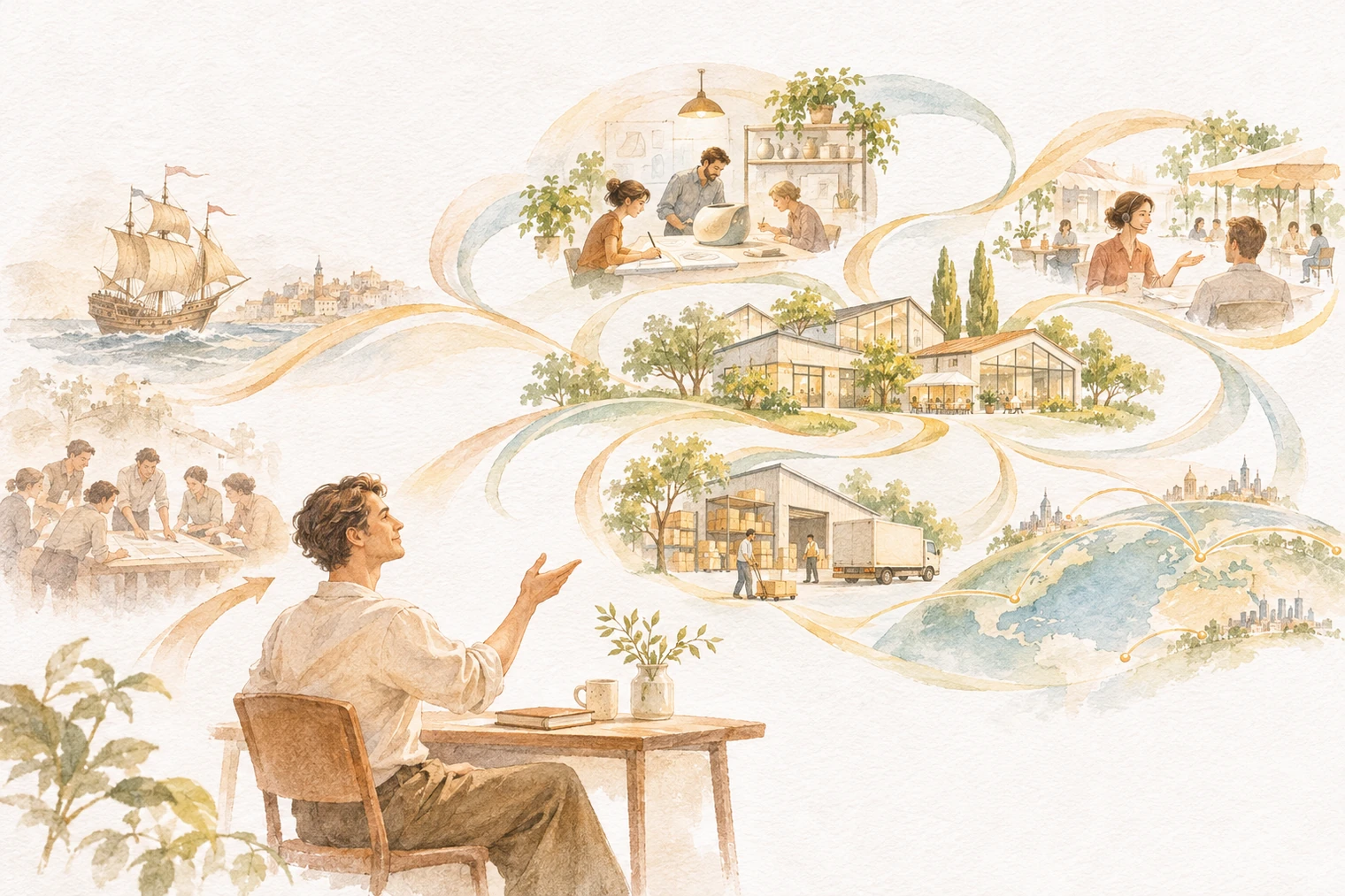
For centuries, a business owner's job was mostly organizing other people's work. On BossForce, you no longer have to manage every action. The owner sets the direction and the limits, judges the results and makes the decisions that matter:
“The packaging is too complicated. Make it simpler.”
“Customers are costing us too much. Find another channel.”
“I want to launch in Germany.”
The company turns those intentions into plans and actions on its own. Decisions take minutes, not a whole workday.
Your work doesn't go anywhere: the baker bakes. All that disappears is the need to personally coordinate everyone else.
That unlocks a scale once out of reach for anyone working alone: a billion-dollar company with a single owner. Today, a company like that would be a sensation.
One day there will be hundreds of them.
7. A new infrastructure for the economy

At first glance, BossForce might look like just another AI app. But we're not building an app. We're building the infrastructure that millions of companies will run on.
There was a time when companies bought servers and built data centers. AWS made computing power available to any developer — and products appeared that would once have required huge investments in hardware and engineering teams. BossForce does the same for the organization: it gives one person what used to take a full staff.
First, BossForce launches the business. Then it runs it and grows it. Then companies start working with one another inside a shared network, and tasks, orders, deals and payments all flow through it.
The network learns from the anonymized experience of every company: which business models work, which markets are growing, where the demand is and what resources it takes to succeed. That makes it possible not only to help existing companies, but to spot where a new company is missing — and offer it to people ready to own it.
BossForce becomes the operating layer of a new economy — an economy where a business of your own no longer means assembling and sustaining an organization.
8. Our vision

For forty years, business books have told craftspeople the same thing: if you want your own business, stop being a craftsman. Stop baking bread and start running a bakery. Work on your business, not in it. Become a manager, become an entrepreneur, become someone else.
We say the opposite.
Stay a baker.
You don't have to turn yourself into a manager to own a business. Your craft, your taste and your decisions — that is the business. Everything else is handled by BossForce.
We're building BossForce so that talent doesn't depend on knowing how to hire, an idea doesn't depend on having a team, and a business of your own doesn't mean giving up the work you love.
In 1602, the company learned to pool the capital of thousands of people. Four centuries later, we're taking the next step: the organization around a business no longer has to be built.
We believe in a world where anyone can say “I want to build...” — and have a company that turns intent into results.
The company was invented in 1602. Today we're reinventing it.
BossForce. A Personal Company for everyone.