Reviewing work and making corrections stick
The first correction is easy: say what is wrong and the agent fixes it. The question that decides whether this product saves you time is what happens to that correction afterwards — whether it applies once, or forever.
Reviewing
Read the result as the thing it is meant to be. A draft post is judged as a post, not as a chat reply.
Three questions catch most problems. Is it usable as it stands, or does it need work you were hoping to avoid? Does it sound like you? And is anything in it invented — a number, a date, a claim about your business that you did not supply?
That last one deserves a habit rather than an occasional spot-check. Agents draw on your files, your connected tools, and general knowledge, and the third has no idea what is true about you. Where a fact matters, ask where it came from. A good agent will tell you, or admit it assumed.
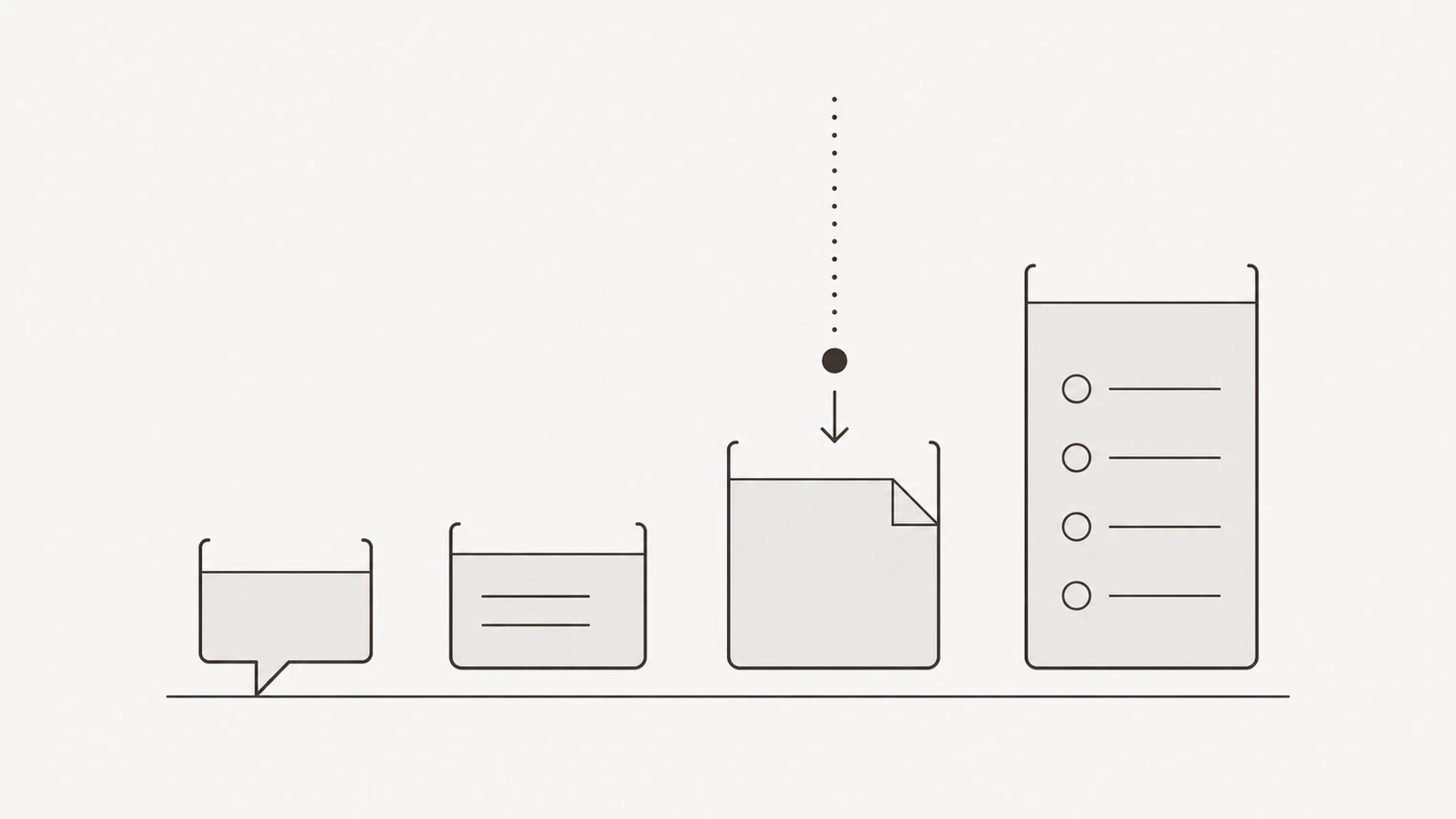
The four places a correction can live
In the chat. One-off. "Shorter, drop the third point." Right for anything specific to this piece of work. Costs nothing, teaches nothing.
As a memory. A fact or preference that should shape everything from now on. "We never discount." "Our customers are technical." Say remember this and it becomes part of the workspace's knowledge — see memories.
In an agent's instructions. How this particular role works: what it owns, what it must always do, what it must never do without asking, the standard it is held to. This is the right home for "always run pricing changes past me first" or "write in British English".
You will find these on the agent's card, under a tab called AGENT.md — the app names a few tabs after the document behind them, and this is the document the agent actually follows. Read it, edit it, or just say what you want changed and let the agent rewrite it.
As a playbook. How a repeating piece of work should be done, step by step. Right when the correction is really a procedure — "check the numbers against the spreadsheet before writing the summary, every time".
Picking between them
Ask what the correction is really about.
If it is about this piece of work — chat.
If it is about the world — a fact, a preference, a constraint that is simply true — memory.
If it is about how this role behaves — the agent's instructions.
If it is about the steps of a recurring job — a playbook.
You do not have to place it yourself. Say what is wrong and add "make sure this doesn't happen again", and the agent will propose where the correction belongs. It is worth glancing at what it picked, because the wrong home is why a correction sometimes does not hold.
When corrections do not hold
If you have said the same thing three times, something is off. Ask directly: "what do you have on record about how I want this done?" The usual answers are a correction that was only ever a chat message, two memories that contradict each other, or an instruction that lives on one agent while a different agent is doing the work.
If an agent keeps missing on a whole area rather than in detail, the problem is usually the role rather than the instructions — your team of agents covers when to split one.
Tell it when it went right
Underrated. "This is exactly the format I want, keep doing it this way" is as durable a correction as any complaint, and it is the only way an agent learns what to preserve when it changes something else.
Early on, BossForce will also ask you directly what is working and what is not. That answer stays with your workspace and shapes how the agents work with you afterwards, so it is worth a real reply rather than a polite one.