How to ask for what you want
Agents are good at doing things and bad at guessing what you meant. A minute spent on the request routinely saves twenty minutes of correcting the result.
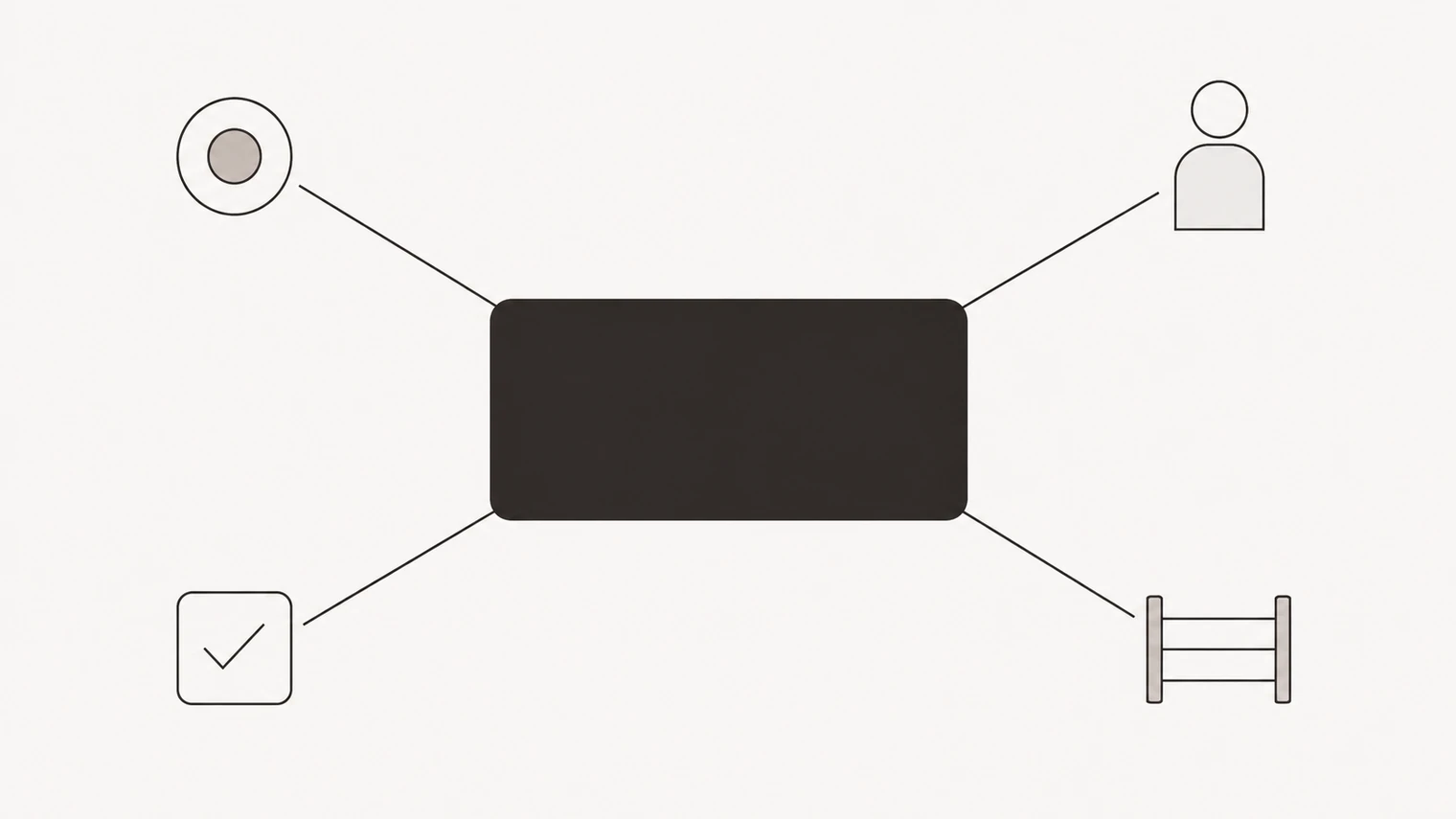
Four things worth saying
The outcome, not the activity. "Find out why sign-ups dropped in August" gives an agent room to look in the right places. "Pull the August numbers" gets you numbers, and then you do the thinking.
Who it is for. Work aimed at nobody in particular reads like it. Naming the audience — a prospect, your accountant, your own eyes only — changes the tone, the length and how much is explained.
What good looks like. The single most useful sentence in any brief. Three options with trade-offs. Under 400 words. Something I can send without editing. Numbers I can check.
The boundaries. What is out of scope, what must not happen, what you have already tried and rejected. Agents will otherwise happily rediscover last year's dead end.
You do not need all four every time. For anything you would have hesitated to hand a new hire, use all four.
Give it the material
The agent already has your workspace: goals, plans, memories, past work. What it does not have is the thing on your desk.
Attach files directly in the chat — a brief, a spreadsheet, a screenshot, a contract. Use @ to point at a specific goal, task, project or agent, so "like the last one" resolves to an actual thing rather than a guess. And if the work needs a service you use, connect it: an agent with your calendar can schedule, and an agent without it can only tell you what it would have scheduled. See connecting tools.
You can also dictate instead of typing, which for a long brief is usually faster and, oddly, more complete — people say more out loud than they type.
Let it ask
A question back is the system working. Answer it properly rather than with "just do your best" — the agent asked because the answer changes the output.
If you would rather it decide, say that explicitly: "your call, use your judgement, tell me what you chose and why". That is a legitimate instruction and it will follow it.
When you do not know what you want
Say so. "Something is wrong with how we sell, I cannot name it" is a workable start. The agent will ask about how things run now, offer two or three concrete readings, and let you correct one — which is much easier than producing the perfect brief from a blank page.
Big things
For anything substantial, ask for a plan before the work. "Before you write it, tell me how you would approach this and what you would leave out." You get to fix the direction while it is a paragraph, not after it is a document.
Then stay near the first run. Watch the steps, stop it early if it drifts. After two or three pieces of work you will know exactly how much brief this particular job needs — and for most repeating work the answer soon becomes "none", because it has become a playbook.