What BossForce is
BossForce gives you a workspace with AI agents in it. You describe what you are trying to achieve, the agents plan and do the work, and you review what comes back. The job you keep is the one worth keeping: deciding.
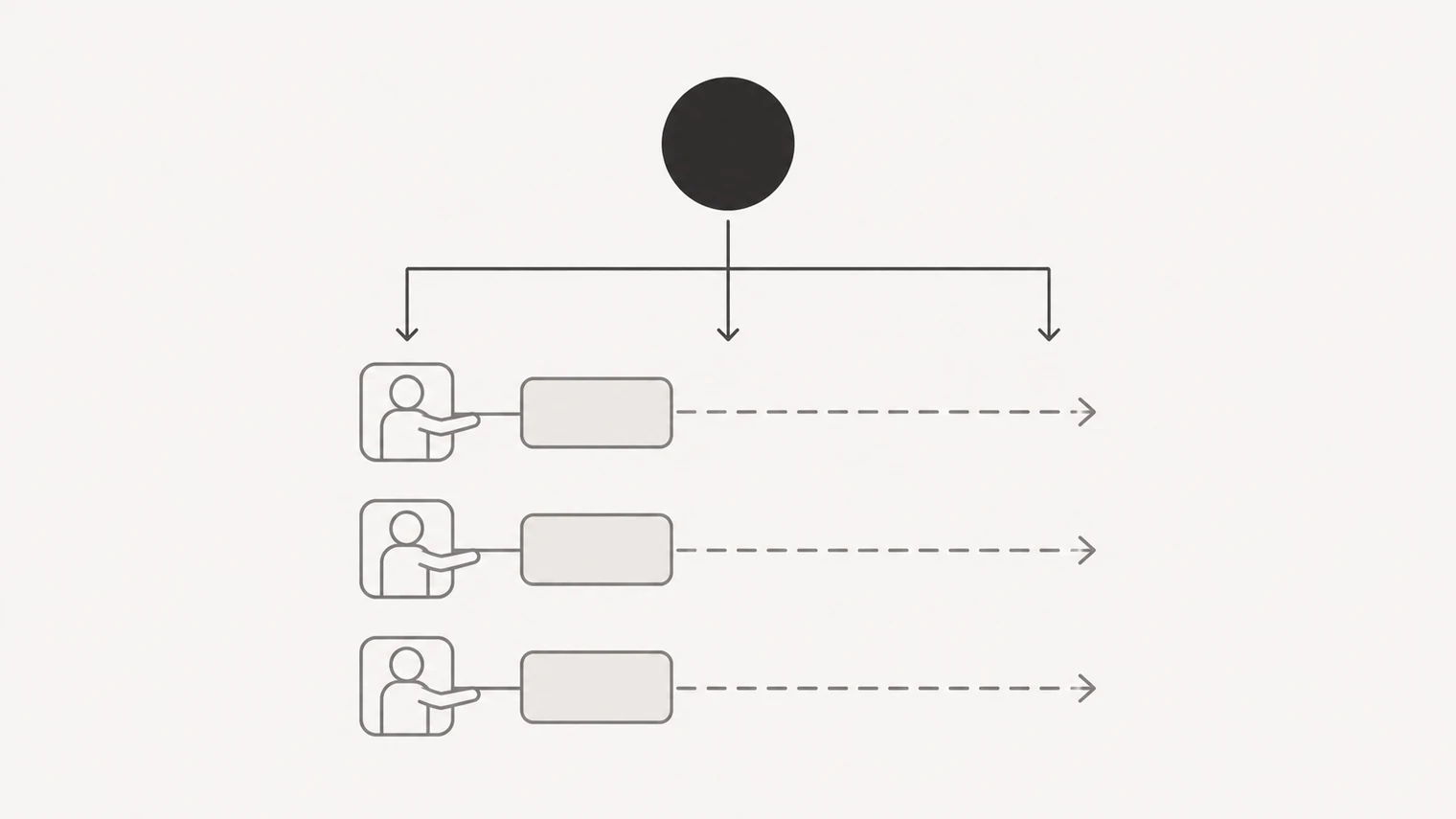
The shape of it
A workspace holds one endeavour — a business, a practice, a project, a mission. Inside it live your goals, the projects and tasks that move them, the processes worth repeating, the agents that run them, and everything the workspace has learned about you and your market.
Every one of those is a record you can open, and that matters more than it sounds. When an agent decides something, the decision is written down where you can read it, correct it, and if need be put it back the way it was. You can take the whole lot with you at any time. There is no version of your workspace that you are shown a summary of and never get to see.
You mostly work by talking. There is a chat next to every section, and the agent on the other side can create a goal, draft a plan, run a process, or go do something in Gmail or a spreadsheet. The buttons in the interface are shortcuts for things you could also just ask for.
What it is good at
The pattern BossForce fits best is work that is real but never urgent enough to get done: the weekly report nobody writes, the follow-ups that go cold, the content calendar that slips, the numbers nobody has looked at in a month. An agent has no problem doing the same careful thing every Tuesday.
It is also good at the first draft of thinking work — a market scan, a set of options, a plan with the risks written down — where the value is in having something concrete to react to rather than a blank page.
And it is good at being told, once, how you like things done, and then doing them that way. That is what memories and playbooks are for.
What it is not
It is not a chatbot with a nicer wrapper. The workspace persists between conversations: goals stay, plans stay, what the agent learned about your customers stays, and work continues while you are not there.
It is not an automation builder either. You do not draw a flowchart of triggers and steps. You state the outcome and the constraints, and the agent works out the route — which is better when the work needs judgement, and worse when you want the exact same three API calls every time and nothing else.
And it is not autonomous in the sense of unsupervised. Agents ask you before they do things that matter, and everything they do is written down where you can see it. A workspace nobody reviews drifts, quietly and expensively.
What you actually do here
Four things, and the first one is the largest.

You set the direction. What the goal is, what a good result looks like, what is out of bounds. Agents are very good at execution and cannot invent your intent.
You answer. Approvals, judgement calls, the fork in the road the agent cannot take on your behalf. These arrive in your inbox rather than in a pile of notifications.
You review. Read what came back, say what was wrong, and let the correction stick so the next one is better.
You expand. When something works, turn it into a repeatable process. When a whole area needs owning, add an agent for it.
Everything else — the drafting, the chasing, the collating, the checking, the reformatting — is what you delegate.
Where to go next
If you have not signed up yet, start with your first thirty minutes: setup is a conversation, and it decides how good everything after it will be.
If your workspace already exists, the fastest way to understand it is the tour, then one real piece of work from request to result.